If you ask ten different vendors, “How do you develop sweepstakes software?”, you’ll get ten different “step‑by‑step” checklists. You’ll see pages that talk about “choose your tech stack,” “integrate game providers,” and “add compliance,” like it’s a shopping list.
But if you ask an operator who’s already launched, they’ll tell you the real bottleneck:
*You don’t fail because you picked the wrong language.
You fail because you designed the wrong product.*
In 2026, developing a platform requires partnering with an experienced sweepstakes software development company to build a product-level, compliance-heavy, and AI-ready roadmap before writing the first line of code
This part of the guide cuts through the generic advice and shows you exactly what to decide, in what order, if you want to build a sweepstakes platform that operators can actually launch, scale, and monetize.
Most how to build a sweepstakes platform tutorials make it sound like you’re building a game engine.
You’re not.
You’re building a sweepstakes‑ready product stack—a rules‑enforced, virtual‑currency‑driven system that manages:
If you’re developing sweepstakes software, you’re not just wiring up a few games.
You’re building a product‑grade platform that must be scalable, compliant, and AI‑ready from day one.
Our experts can deliver the platform in 6 weeks
Operators don’t care about “interesting ideas.” They care about growth curves, regulation, and unit economics.
In 2026:
If you want to develop sweepstakes software, you’re not entering a niche that’s fading.
You’re entering a growth‑phase market where platforms that can ship fast, scale, and evolve are the real winners.
Developing sweepstakes software is 10% technology and 90% product and business decisions.
Here are the five things you must decide before you start building:
This choice shapes:
Sweepstakes rules are anything but universal; whether launching a direct-to-consumer digital site or configuring internet cafe sweepstakes software for retail environments, you must map out state-by-state compliance rules.
You’re not “building software for the world.”
You’re building a jurisdiction‑specific product that can, if needed, scale to more regions later.
This is where product‑thinking meets business‑thinking.
You’re developing sweepstakes software with real‑world economics in mind, not just “fun mechanics.”
Most “how to develop” guides stop at “build or buy.” A better way to think about it is in three concrete paths—and the smart operators use a hybrid strategy.
The key insight: you don’t have to pick one forever.
Many operators validate with white‑label, then move to modular or custom as the business scales.
If you want to build something that feels 2026‑grade, not 2018‑grade, you must design for AI‑readiness from the beginning.
Key architectural decisions:
This is the “product‑level” step in software development: you’re not just building a game, you’re building a data‑and‑engine stack that can evolve.
Once you’ve decided your business model, your dev path, and your architecture, you can start building the core stack.
This is the “must‑have” layer:
This is the minimum you need to “develop sweepstakes software” in a way that’s production‑ready, not just a prototype.
Leading sweepstakes casino software providers embed KYC, age-gates, and audit-ready data exports directly into the account creation pipeline from day one
This is the “hard‑but‑necessary” part of “how to develop sweepstakes software.”
You’re not just building a sweepstakes platform from scratch. You’re building a compliance‑heavy, legally‑defensible platform.
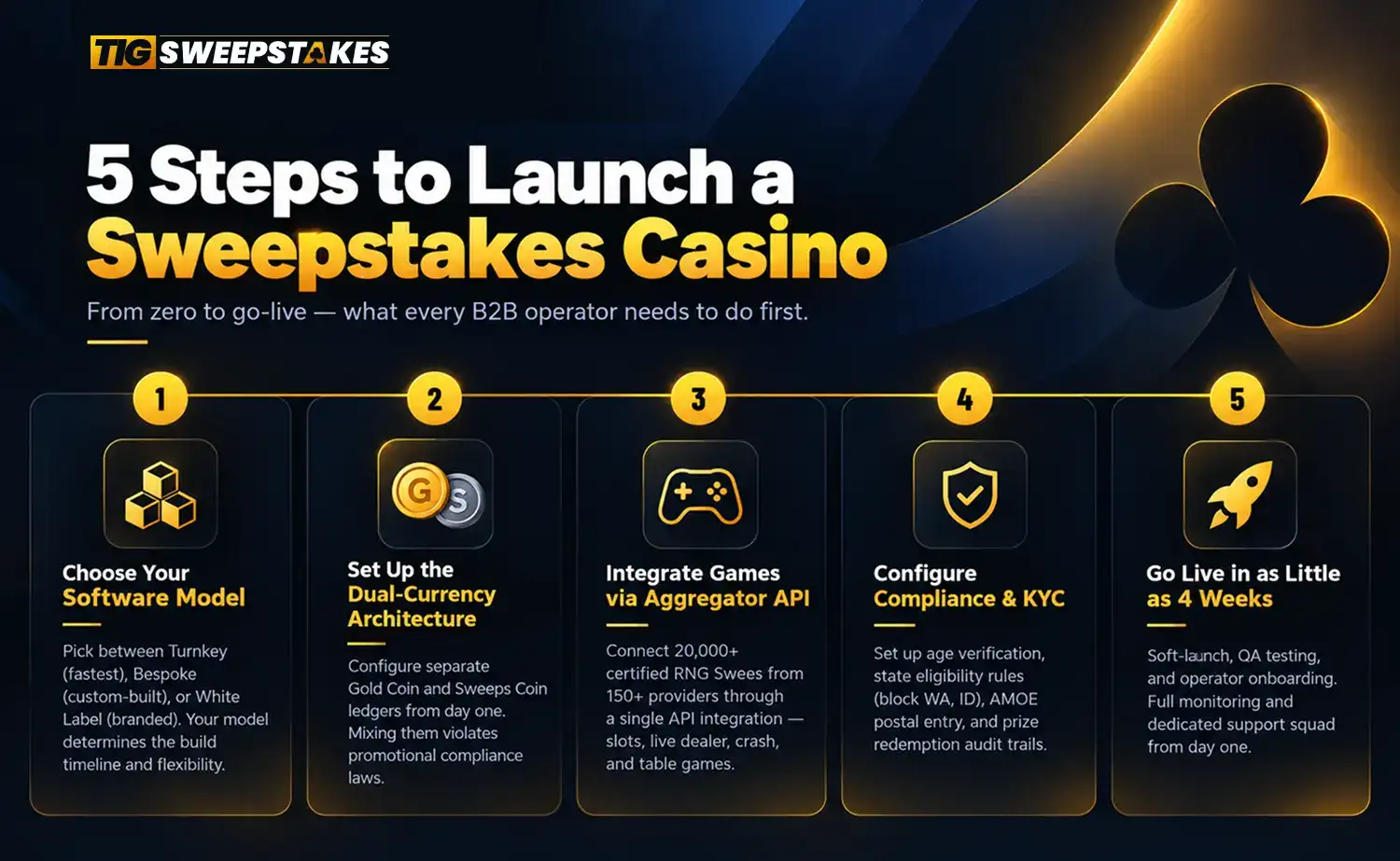
Understanding the underlying mechanics of what are sweepstakes platforms reveals why virtual currency logic is the true heart of the product.
It must handle:
Operators who skip this layer and just “wire up games” end up with platforms that feel like casino‑style wrappers, not real‑world sweepstakes‑ready products.
A sweepstakes software project that ignores analytics is incomplete.
You need:
This is the operator‑level part of the stack:
You’re not just building a fun product.
You’re building a data‑driven, optimization‑ready platform.
Launch on technology trusted by operators handling 100K+ concurrent users.
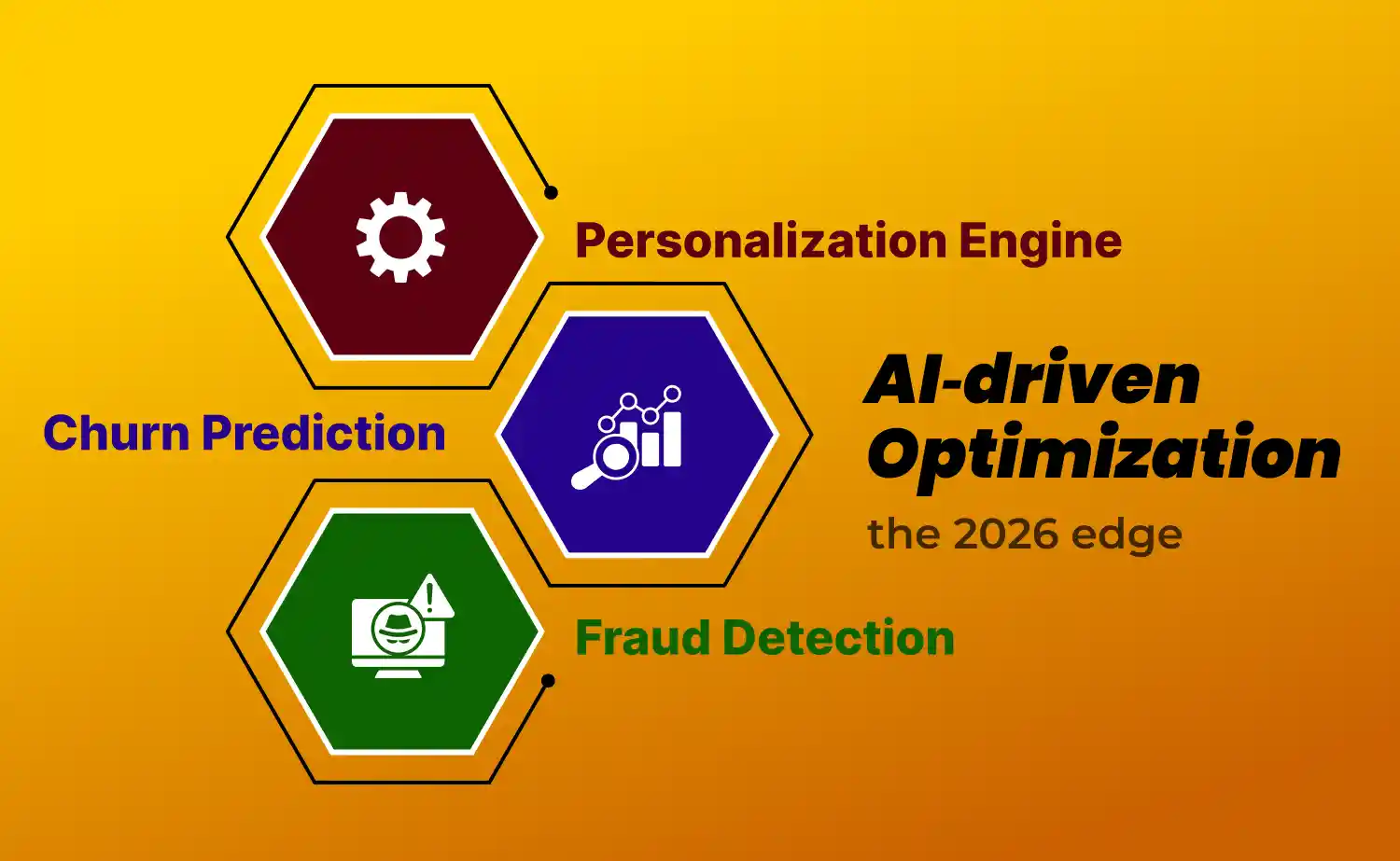
If you want to develop sweepstakes software that feels cutting‑edge, AI‑driven optimization is non‑negotiable.
This includes:
Operators who ignore this layer are stuck in “me‑too” land.
Those who embrace it are building AI‑adjusted, retention‑driven platforms that scale fast.
Developing sweepstakes software isn’t a one‑time event.
It’s a lifecycle:
To do this, you must build an adaptable architecture—one that can plug in new rules, new markets, and new game mechanics without ripping the core apart.
Most guides stop at “launch the platform.” Real operators know the real challenge is scaling and iterating.
In 2026, scaling a sweepstakes‑style platform usually follows this pattern:
This is the “product‑cycle” of sweepstakes‑software development:
Build → Launch → Measure → Iterate → Scale.
If you want to develop sweepstakes software that operators can actually monetize, you must think beyond “just games.”
Common monetization patterns:
This is where product‑thinking meets business‑thinking.
You’re not just building a fun platform.
You’re building a revenue‑generating product.
If you’re serious about how to develop sweepstakes software, TIGSweepstakes is the product‑grade stack that lets you:
Instead of “developing sweepstakes software from scratch,” you’re building on top of a 2026‑grade sweepstakes engine—so you focus on differentiation, not reinventing the core.
Our experts can deliver the platform in 6 weeks
Developing sweepstakes software in 2026 is not about picking the right programming language or wiring up a few games. It’s about making the right product, business, and compliance decisions first, then engineering a stack that can scale, adapt, and monetize over time.
This guide showed you how to:
If you’re building a sweepstakes platform, treat sweepstakes software as a product‑level roadmap, not a coding tutorial. That’s the difference between hobby‑project casinos and serious, operator‑grade sweepstakes businesses.
It means building a rules‑enforced, virtual‑currency‑driven platform that manages user accounts, entries, game‑engine logic, compliance, and operator‑level analytics—all before you even think about “launching.”
Define your business and regulatory model; 2) Choose white‑label, modular, or custom‑build; 3) Design an AI‑ready, compliance‑first architecture; 4) Build the core sweepstakes stack; 5) Launch, iterate, and scale based on data.
Because sweepstakes rules vary by state and country. If you don’t bake KYC, age‑gate, redemption caps, and auditability into the stack from the start, you risk being shut down before the business even scales.
Yes—and in 2026 it should be. AI‑ready sweepstakes software enables personalization, churn prediction, and fraud detection, turning the platform into an optimization engine, not just a game wrapper.
It lets you skip months of compliance and core‑engine development, ship fast with a white‑label or modular stack, and still retain the ability to extend UX, games, and AI layers later.
By soft‑launching to a controlled audience, using real‑time analytics and A/B testing to refine offers and onboarding, then expanding into new markets and jurisdictions with an adaptable architecture.
Yes. Sweepstakes software is virtual‑currency‑driven, often operates under “sweepstakes‑style” legal frameworks, and emphasizes compliance, redemption logic, and non‑real‑money mechanics instead of direct betting.
Because AI‑driven personalization, churn prediction, and fraud detection can meaningfully improve retention, ARPPU, and platform integrity—without forcing operators to rebuild the core stack.
A clear business model, jurisdiction‑aware compliance, modular architecture, AI‑ready data layers, and operator‑grade dashboards for real‑time KPIs and reporting.
By treating it as a product‑level roadmap—focused on design decisions first, tech second—and by building on top of a capable sweepstakes engine (like TIGSweepstakes) instead of reinventing everything from scratch.


© 2026 TIGSweepstakes | All Rights Reserved | Sitemap
Request a Demo
Get a quick look at your potential earnings. Answer four simple questions and see your projected revenue for year one.
Receive your detailed 12-month P&L model, complete with editable line items for cash flow analysis, redemption reserve requirements, and EBITDA sensitivity tables.
Your inputs are used only to generate and deliver your report and are handled in line with Tigsweepstakes's Privacy Policy.


